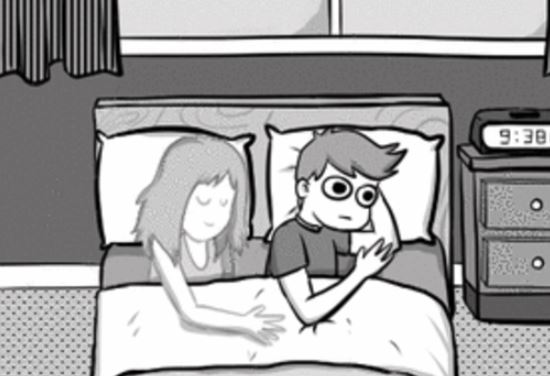
While leading a workshop for married couples the other day, I introduced a concept that turned out to be provocative. What I said was, “Romantic chemistry is comprised as much by being attracted to a partner who will re-open our unhealed psychic wounds, as it is by sexual attraction. This isn’t conscious, but a driving force in the human mating dance is seeking out a partner who will re-wound our primal wounds.”
Wha’ … ??? Am I saying we are masochistic? Why on earth would we want someone to re-wound us? On a regular basis?
Sexual attraction—in addition to the primal desire to hop in the sack with someone—has an evolutionary function. It is the method by which we propagate the species. But guess what? Re-wounding each other is also adaptive. By seeking out someone who will re-open our unhealed wounds, we are allowing this person to do us a service. They are surfacing what needs to be healed, bringing it into the light of day—so that we can heal. This is psychologically, spiritually, emotionally (and, it could be argued physically—since all layers of our experience take place in our body) evolutionarily apt. The more we heal, the more we evolve.
Let me make this more specific. I’ll use a personal example, selecting one from a menu of unhealed wounds my husband and I have managed to surface in each other during our thirty-five years of marriage (we could say thirty-seven, since the high voltage chemistry of not only sexual attraction but of re-wounding started in our courtship).
My husband grew up with a dramatic, emotionally volatile French father, who often ranted around the house, causing my husband as a little boy to sequester himself under his sheets in what he pretended was his helicopter. While on the surface, my father-in-law and I bear no resemblance to each other, lo and behold, Pierre happened to marry a woman (me) who in certain hormonal or otherwise reactive states can become a volatile run-around-the-house freak-show. Meanwhile, I grew up with a mother who had a massive case of undiagnosed A.D.D. and was, in addition to being our mom, a real estate agent and graduate student becoming a psycho-therapist. Let’s just say she was over-extended, preoccupied, often forgetting what she was doing or saying at any given moment, which could translate into not listening to (or literally forgetting about) me. My laid-back groovy husband in no way possesses the zip-around hummingbird energy of my mom. But as an introverted deeply creative soul, he is often lost in his own thoughts, “vers la lune” as his teachers and parents said about him as a child, and when he does not respond to me when we are together, or to my texts in absentia, I re-live the wound of having felt overlooked, forgotten.
So here we’ve got a his-and-hers set of unhealed wounds, me surfacing what is unhealed in my partner from having a volatile (read, when he was little and his dad was big: scary) dad, and he surfacing in me the wound of having felt overlooked (which to a kid, who needs attunement from her mommy, is also scary). So we trigger each other into states where our nervous systems are in trauma response survival mode. Is this pretty? Do our kids love to be around us when this two-way enactment is happening? No, and No.
But is it adaptive? Do we slowly over time unpack and heal our unresolved childhood wounds via this marital dynamic? Yes, and Yes.
The trick, as I tell couples often, is “staying in the ring.” Not running for the hills when the wound re-opens (or, if you do run for the hills, coming back for a Take Two—or Three, or Forty-Five, or Four-Hundred). Describing the wound, what is going on inside of you in this dynamic, allows your partner to see beneath your reactivity into your vulnerability. And allows you to stay with your own wound as a nurturing witness. This is what Carl Jung called standing beside the wound, rather than it it. Working towards being able to do this can be grueling, filled with pitfalls. But when it works, the effort creates intimacy and healing, as a couple and an individual.

